 EN
EN 中文简体
中文简体 English
Smart Insights, Timely Advantage
Focus on the dynamics of enterprises,Grasp the forefront of the industry, Lead new directions of development,Empower the future with prosperity.
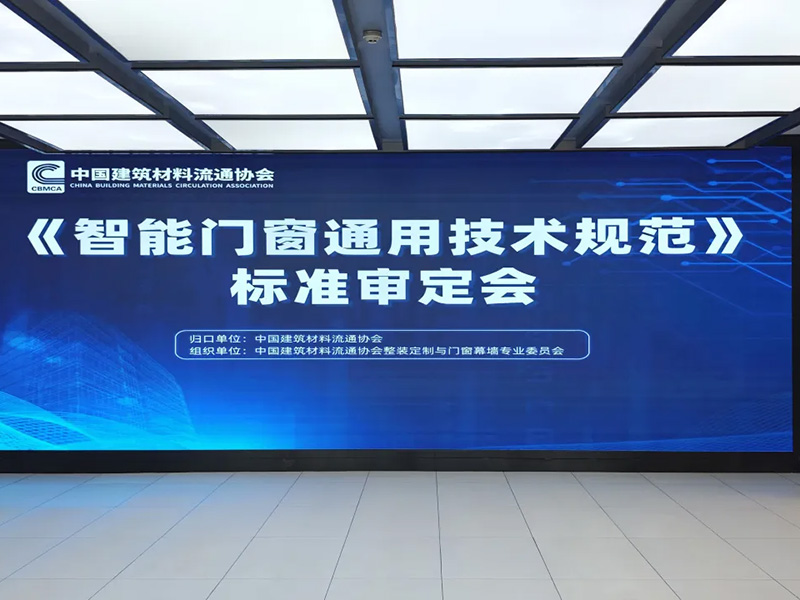
As the intelligent transformation of the construction and home furnishing industry continues to accelerate, smart doors and windows have already moved from conceptual products to high-end residential, commercial real estate, finely decorated real estate and other diverse scenarios, becoming the core entrance to the smart ecology of the whole house. But for a long time, the industry has faced Lack of standards, vague definitions, disordered classification, and uneven technologies Pain points such as "pseudo-intelligent" products flood the market, corporate research and development has no direction, consumers have no basis for purchasing, and market supervision has no yardstick, which seriously restricts the high-quality development of the industry.
Now, this industry dilemma has officially been broken! It is drafted under the centralized management and authoritative leadership of China Building Materials Circulation Association. T/CBMCA 079-2026 "General Technical Specifications for Smart Doors and Windows" Officially released and implemented, as the first general group standard in the field of smart doors and windows in China, it completely fills the gap in industry standards, builds a complete technical specification system, and pioneers the L1-L5 five-level intelligent grading system, marking the end of the smart door and window industry's complete bid farewell to disorderly competition and a comprehensive step forward. Standardization, normalization, high quality A new era of development.
Solve industry pain points and set compliance benchmarks
The "General Technical Specifications for Smart Doors and Windows" implemented this time have been polished after multiple rounds of industry research, expert demonstrations, and corporate discussions. It specifically solves the core pain points that have long existed in the industry and is highly authoritative, practical, and instructive. Standards fully cover smart doors and windows Term definitions, classification marks, basic requirements, general physical properties, intelligent technology, test methods, inspection rules, marking, packaging and transportation and other full-dimensional content, applicable to all types of civil and commercial smart doors, windows and integrated systems, completely ending the industry's vague concept of "intelligent" and mixed products.
Compared with previous fragmented industry reference requirements, this standard has achieved three major breakthroughs: First, Unified technical threshold , clarify the basic performance, electrical safety, mechanical safety, energy conservation and environmental protection and other hard indicators of smart doors and windows, and prevent inferior products from entering the market; secondly, Standardize test procedures , develop unified testing methods and judgment standards to ensure that product performance can be tested, traced, and compared; thirdly, Clarify the bottom line of compliance , providing authoritative basis for enterprise production and research and development, market access, project bidding, and promoting the industry to shift from price competition to quality and technology competition.
Redefine the value of smart doors and windows
The core innovation of this standard is the country's first L1-L5 five-level intelligent level grading model, which breaks the previous chaos of "no levels of smart doors and windows, and no standards for functions". It accurately divides product intelligence levels through multi-dimensional and quantitative indicators. It is not only a "roadmap" for enterprise research and development, but also a "clear ruler" for consumers to purchase, and a "wind vane" for industry upgrading.
● L1 level (basic intelligence): It has basic electric opening and closing and manual remote control functions to meet basic automated operations and replace traditional manual doors and windows. It is an entry-level smart configuration and adapts to basic home decoration needs.
● L2 level (advanced intelligence): Equipped with a basic sensing module, it can automatically respond to single environments such as rain sensing, wind sensing, and temperature sensing. It also has basic anti-pinch, overload protection and other safety functions to improve the convenience of use.
● L3 level (collaborative intelligence): It supports multi-sensor linkage and can be connected to smart home systems to achieve scene-based linkage control. It has functions such as abnormal alarms, remote monitoring, and scheduled opening and closing, and is suitable for preliminary smart collaboration scenarios in the whole house.
● L4 level (advanced intelligence): It realizes multi-device interconnection and independent scene optimization, has advanced functions such as fault warning, energy consumption management, and fire protection linkage, and provides more accurate intelligent response, adapting to scenarios such as high-end residences and finely decorated real estate.
● L5 level (top intelligence): Equipped with AI learning algorithms, it has core capabilities such as user habit adaptation, demand prediction, multi-user differentiated adaptation, and distributed collaborative decision-making, achieving true autonomous intelligence and representing the highest technical level in the industry.
This grading system abandons vague functional descriptions and uses quantitative indicators to define the level of intelligence, allowing enterprises to have a direction for research and development, standards for product positioning, and a basis for marketing promotions, thoroughly distinguish between "real intelligence" and "pseudo-intelligence", and promote the upgrading of the industry to high-end and intelligence.
Standard Navigation, Intelligent Building of Doors and Windows New Bureau
The official implementation of T/CBMCA 079-2026 "General Technical Specifications for Smart Doors and Windows" can be called An important watershed in the development of smart doors and windows industry , completely ending the previous barbaric growth of the industry, and promoting the entire industry to enter a stage of healthy and high-quality development that is guided by standards, driven by technology, and won by quality.
After the new standards are implemented, inferior products will be gradually eliminated from the market and the industry structure will continue to be optimized; for consumers, with an authoritative and unified purchasing reference, relying on the L1-L5 intelligent grading system, they can clearly identify product quality, effectively avoid purchasing traps, and buy safe, intelligent, and durable high-quality products; for engineering channels, standard The standard provides a unified basis for bidding and project acceptance, which can not only ensure the overall quality of the project, but also significantly reduce subsequent after-sales risks; from the perspective of the long-term development of the industry, standardization construction will continue to promote iterations of technological innovation, accelerate industrial transformation and upgrading, and help the entire smart door and window industry move steadily towards standardization, branding, and internationalization.
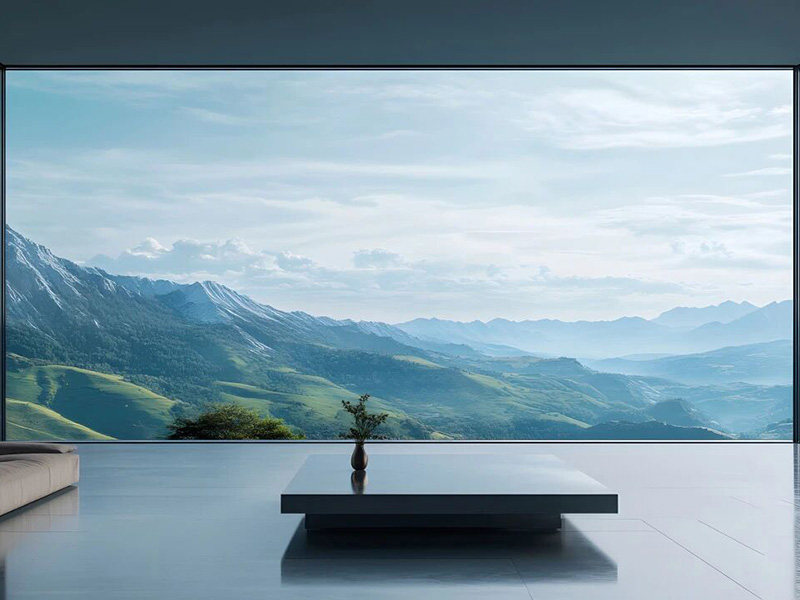
Standards set the pattern, and norms win the future. T/CBMCA 079-2026 "General Technical Specifications for Smart Doors and Windows" has been officially implemented, completely filling the standard gap in the field of domestic smart doors and windows, and opening a new chapter in industry standardization and standardized development. In the future, under the guidance of this authoritative standard, the smart doors and windows industry will gradually eliminate inferior products, clear up market chaos, promote continuous technological innovation and product iteration, help the steady upgrade of the building and home intelligent industry, lay a solid foundation for high-quality human settlements, and jointly build a new pattern of sustainable development of the smart doors and windows industry.




National Service Hotline:
Address:No. 2000 Juyang Avenue, Taizhou Bay New Area, Taizhou, Zhejiang Province, China
Email:zhongyakjjt@163.com
Copyright© Zhejiang Zhongya Technology Group Co., Ltd.
