 EN
EN 中文简体
中文简体 English
Smart Insights, Timely Advantage
Focus on the dynamics of enterprises,Grasp the forefront of the industry, Lead new directions of development,Empower the future with prosperity.
In the 2025 Double Eleven home consumption list, young people's shopping carts are undergoing obvious changes - cosmetics are giving way to smart home appliances, fashionable shoes are replaced by energy-saving building materials, and the sales of home appliances have exceeded 22%. When "upgrading your home" has become a new consumption theme, the pain points of traditional doors and windows have become more prominent: air conditioning costs remain high on hot days, and the air in confined spaces is turbid; when you live alone, you are always worried about abnormalities outside the door, and traditional security false alarms continue; you want to respond to the "double carbon" call, but you can't find practical energy-saving solutions. The black technology of smart doors and windows that will emerge in 2025 is accurately solving these problems.
National policies have already sent signals to encourage the electrification and digital transformation of traditional building materials such as doors and windows. Nowadays, the single attribute of traditional doors and windows of "shielding from wind and rain" has been subverted, and the new generation of intelligent system doors and windows have evolved into "active service stewards". The concentrated explosion of the three core technologies in 2025 will completely transform doors and windows into home core terminals that understand the environment, protect safety, and generate electricity.
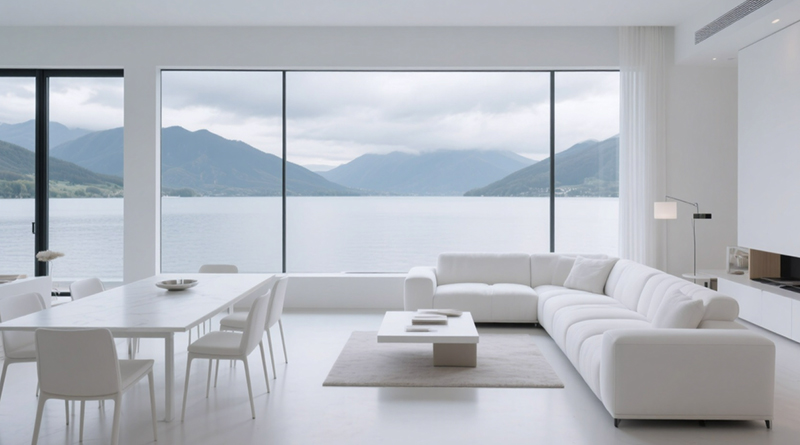
Dynamic Adaptation: Intelligent Microclimate Adjustment
Who doesn’t want the temperature at home to be always comfortable and the air to be fresh? The dynamic environment adaptive technology of 2025 will allow doors and windows to become accurately controlled "microclimate regulators", saying goodbye to the rigid experience of fixed modes.
Its core secret is ternary sensing matrix ——Temperature, PM2.5, and air flow sensors capture indoor and outdoor environmental data in real time, and with the edge computing module, decisions can be made and operations executed within 0.3 seconds. When the indoor carbon dioxide concentration is higher than 1000ppm ("Indoor Air Quality Standard" GB/T 18883-2022 recommended warning threshold), the doors and windows will automatically turn on the top-hung ventilation mode to ensure air circulation and avoid direct cold wind blowing; once an unexpected sandstorm or heavy rain is detected outdoors, the sealing strip will pass through the electrorheological technology The technology hardens instantly, and the sealing level jumps from IP54 (dustproof level 5, waterproof level 4, can prevent splashing water) to IP68 (dustproof level 6, waterproof level 8, can be immersed in water for a long time under specified pressure), even fine sand and dust can be seamlessly penetrated.
According to authoritative testing data in the field of building energy conservation, this type of smart doors and windows can Reduce air conditioning load by 25%-30% in summer, reduce heating energy consumption by 20%-25% in winter, and control indoor temperature fluctuations within ±1.5°C. . For families with elderly people, children or sensitive people at home, this stable living environment is undoubtedly a healthy "invisible shield".
The use of foamed composite strips that expand when exposed to water combined with multiple sealing processes can further improve the air and water tightness of doors and windows, effectively cope with extreme weather such as typhoons and rains, and comply with the national standard "Grading and Testing Methods for Wind Pressure Resistance of Building Doors and Windows".
Biological protection: 360° safety protection
Home security is always the bottom line, smart doors and windows in 2025 have Upgrade protection from "lock" to "whole system protection" , using multi-modal biometric technology to weave a 360° safety net with no blind spots.
The millimeter-wave radar built into the door and window profile is the "first sentry". When someone approaches within 1.5 meters, the system will immediately start triple biometric verification: the iris scanning matching degree must reach more than 99.5% (mainstream high-precision equipment parameters in the industry), the gait analysis cycle error does not exceed ±0.3 seconds, and the voiceprint recognition frequency covers 300-3400Hz (the audible range of the human ear and the core frequency band of speech). This "multi-dimensional cross-validation" completely eliminates security vulnerabilities such as fingerprint copying and password cracking.
In case of abnormal situations such as violent window breaking, the three-level protection mechanism will be activated instantly: In the first step, the glass surface forms an ion protective layer through electrostatic induction, and the hardness increases by 30%-40%; in the second step, the polycarbonate interlayer automatically expands to prevent glass fragments from flying and hurting people; in the third step, the frame releases an instantaneous voltage of 3000V (current <10mA, in line with GB/T 13870.1 electrical safety standard, harmless to human body) to deter intruders, and at the same time push dynamic images to the owner’s mobile phone and property security center in real time.
Energy recovery: doors and windows turn into power stations
Driven by the "dual carbon" policy, smart doors and windows in 2025 have become household "micro power stations" that can be self-sufficient and make money by selling electricity. At the core of all this is a breakthrough in cadmium telluride thin-film solar cell technology.
By integrating cadmium telluride thin-film cells in insulating glass, doors and windows can generate electricity while maintaining a light transmittance of over 80%. Currently, the photoelectric conversion efficiency of mass-produced components of this type of cells has exceeded 17%, with the highest efficiency in the laboratory reaching 21.28%, and it can still generate electricity stably in low-light environments. The vanadium flow battery built into the window frame is responsible for energy storage and can store 60% of the power generated. It has a cycle life of more than 20,000 times and a designed service life of 20-25 years, fully meeting the daily needs of families.
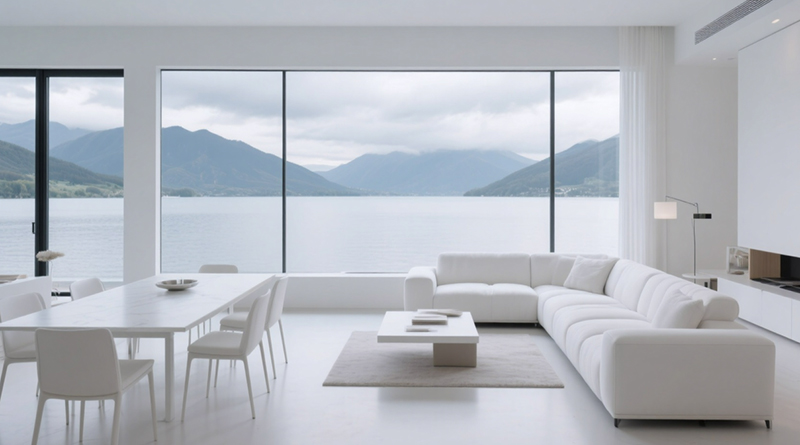
From "passive defense" to "active service", from "energy consumption" to "energy production", the evolution of intelligent system doors and windows is essentially an upgrade of the living concept. Data from the China Construction Metal Structure Association shows that the market penetration rate of high-end doors and windows will reach 75% in 2025, an increase of 38 percentage points from 2020.
Choosing an intelligent system window is not only buying a product, but also introducing a new one to your home. Active environment manager . It works silently, optimizing light, air, temperature and sound, returning the energy originally used to resist changes in the outside world to life itself.
When technology is invisible, comfort happens naturally ——This is perhaps the most profound change that intelligent system doors and windows have brought to us.




National Service Hotline:
Address:No. 2000 Juyang Avenue, Taizhou Bay New Area, Taizhou, Zhejiang Province, China
Email:zhongyakjjt@163.com
Copyright© Zhejiang Zhongya Technology Group Co., Ltd.
