 EN
EN 中文简体
中文简体 English
Smart Insights, Timely Advantage
Focus on the dynamics of enterprises,Grasp the forefront of the industry, Lead new directions of development,Empower the future with prosperity.
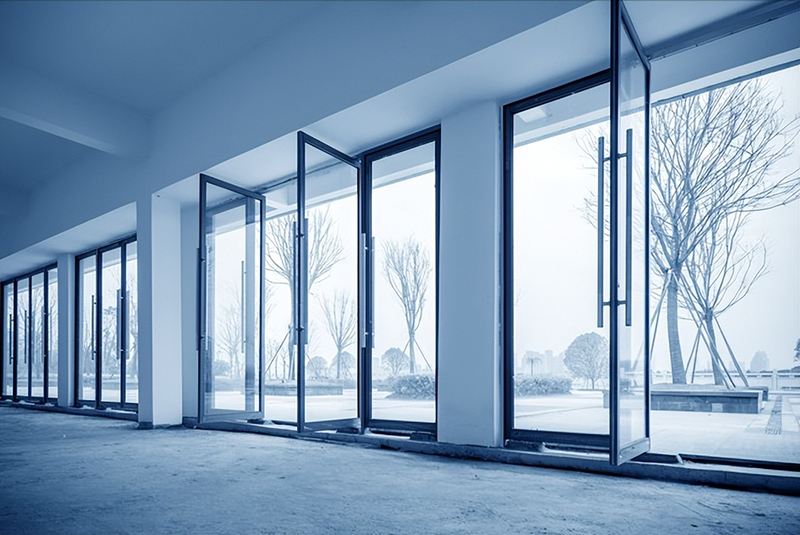
In 2025, China's doors and windows industry will officially enter the trillion-dollar market track. In this blue ocean full of opportunities, system doors and windows bucked the trend with an annual growth rate of 35%, far exceeding the industry average growth level of 6.5%, and has become the "darling" supported by many national policies. While traditional doors and windows are still stuck in the quagmire of homogeneous price wars, why can intelligent system windows gain policy favor and lead industry changes? Behind this is the inevitable convergence of dual carbon goals, people's livelihood upgrades and industrial transformation.
Release of policy dividends: enabling system window growth
Policy guidance at the national level has always been the "baton" for industrial development. In recent years, from the State Council to local governments, a series of policies focusing on building energy conservation, green development, and smart homes have been intensively introduced, establishing a complete policy support system for the rise of smart system windows.
.Driven at the core of the dual carbon goals, "2024-2025 Energy Saving and Carbon Reduction Action Plan" It is clearly proposed to implement the promotion of energy-saving doors and windows, requiring that the energy-saving renovation area of existing buildings be completed by the end of 2025 by more than 200 million square meters compared with 2023, and the energy-saving rate of residential buildings after renovation is increased by 30%. And " Implementation Plan for Carbon Peaking in Urban and Rural Construction Sector" More directly link the energy-saving performance of doors and windows to building energy consumption, require new urban buildings to fully implement green building standards in 2025, and promote the application of high-performance energy-saving doors and windows. These policies have directly raised the entry threshold for the door and window industry in terms of energy consumption standards and renovation tasks. Intelligent system windows have become the core carrier of policy implementation due to their excellent energy-saving performance.
At the same time, the promotion of large-scale equipment updates and trade-in of consumer goods has further activated existing market demand. Relevant action plans issued by the State Council Clearly consider doors and windows as the focus of energy-saving renovation of existing buildings , Shanghai, Jiangsu and other local governments have issued specific plans. Shanghai alone plans to promote energy-saving renovation of 32 million square meters of existing buildings, focusing on promoting energy-saving doors and windows. In addition, policies such as the "Beijing Special Action Plan to Deepen Reforms and Boost Consumption" encourage the promotion of smart home products and provide policy endorsement for the scenario-based application of smart system windows.
Technical core adaptation: natural fit with policy requirements
The favor of policies never comes out of thin air. The technical advantages of intelligent system windows make it the best choice to meet policy requirements. In building energy consumption, heat loss related to doors and windows accounts for up to 30%, and intelligent system windows have fundamentally solved the pain points of this industry through technological innovation.
In terms of energy-saving performance, intelligent system windows have surpassed traditional doors and windows in all aspects. Current policies require that the heat transfer coefficient of doors and windows must be controlled below 1.5W/(㎡·K). However, through the integrated application of technologies such as LowE glass, broken bridge aluminum profiles, and polyurethane foam filling, mainstream intelligent system windows can have a heat transfer coefficient as low as 1.2W/(㎡·K) or below, and some high-end products can even reach 0.8W/(㎡·K). Data shows that compared with traditional doors and windows, smart system windows can reduce a household's electricity consumption by 30% to 40%, which is in line with the core goal of building energy conservation and carbon reduction.
The intelligent upgrade allows it to achieve a leap from "passive protection" to "active management". A smart system window developed by a company has built-in gas sensors, wind and rain sensors and other modules. It can respond to gas leaks within 3 seconds and automatically open the window for ventilation. It will automatically close in case of wind and rain. With functions such as voice control and face recognition, it builds a comprehensive home security defense line. This smart closed loop of "sense-response-control" not only improves living comfort, but is also in line with the policy-driven development direction of "whole-house smart IoT" and has become an important entrance to the smart home ecosystem.
At the level of green manufacturing, the intelligent system window industry chain also fully responds to policy calls. The policy requires the door and window industry to increase the proportion of recycled materials. In 2024, the proportion of recycled zinc in the field of door and window accessories has exceeded 35%, and it is expected to increase to more than 45% in 2025. By promoting flexible production lines and digital twin technology, leading companies have reduced unit production costs by 18.7% and controlled product defect rates to 0.32%, achieving a win-win situation between economic and environmental benefits.
Trillion market opportunities: demand and policy fit
Policy guidance must ultimately be based on market demand. The high growth of smart system windows is essentially a two-way fit between policy guidance and consumption upgrades. China's doors and windows market size has exceeded 1.1 trillion yuan in 2025 , among which the existing housing renovation market is expected to reach 230 billion yuan, with an annual growth rate of 15%. This market has become an important growth pole for intelligent system windows.
With the upgrading of consumption concepts, consumers' demand for doors and windows has shifted from simple protection from wind and rain to a comprehensive experience of health, energy saving, and intelligence. The "2025 Green Doors and Windows Consumption White Paper" shows that more than 80% of consumers regard energy-saving performance as the primary purchase indicator, and the focus on intelligent functions has increased by 38% year-on-year. In the high-end residential market, the area of new high-end commercial residential buildings nationwide will exceed 320 million square meters in 2025, a year-on-year increase of 9.7%. The demand for smart system windows in these projects has reached 32.7%.
The differentiated demands of regional markets further confirm this trend. The demand for system windows in East China accounts for 38.6%, and the penetration rate of system windows in Guangdong Province has exceeded 35%; in North China, with the growth of residential area in Beijing, Tianjin and Hebei, the market potential continues to be released. The precise matching of regional implementation of policies and market demand has formed a global growth pattern for intelligent system windows.
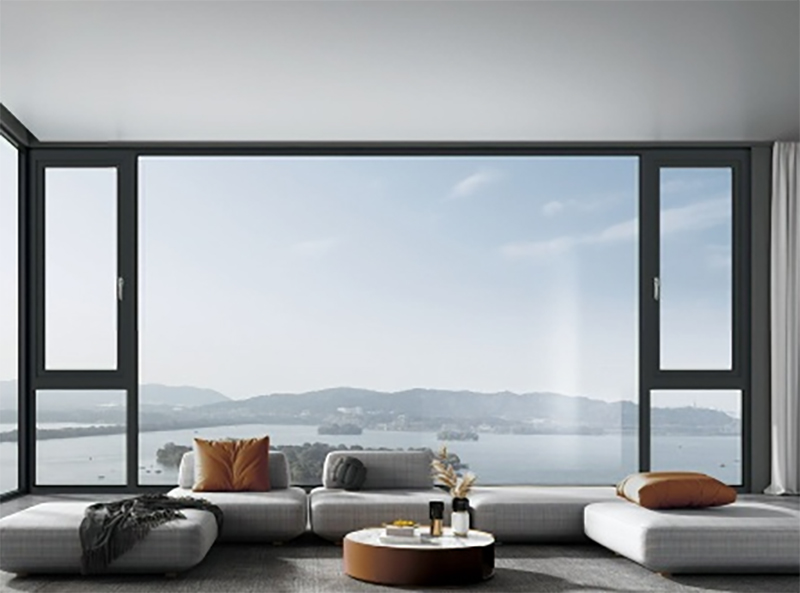
From the intensive release of policy dividends, to the precise adaptation of the technology core, to the rigid support of market demand, the 35% high growth of intelligent system windows is no accident. Behind its becoming the "darling" of the policy is the practice of the concept of green development, and it is also a response to the upgrading of people's livelihood quality.
Looking to the future, with the further support for green building materials and smart home industry chains from policies such as the Catalog of Industries to Encourage Foreign Investment (2025 Edition), as well as the implementation of the carbon footprint certification system, the market penetration rate of smart system windows will increase from the current 21% to 35%, and the proportion of green energy-saving products will exceed 65%. Driven by both policies and markets, smart system windows will not only reshape the competitive landscape of the doors and windows industry, but also become the core force in driving the carbon peak in the construction sector and achieving high-quality living.




National Service Hotline:
Address:No. 2000 Juyang Avenue, Taizhou Bay New Area, Taizhou, Zhejiang Province, China
Email:zhongyakjjt@163.com
Copyright© Zhejiang Zhongya Technology Group Co., Ltd.
